Capsicum chinense
Scotch Bonnet - Scoville, smaak & toepassingen
Scotch Bonnets look like squashed bonnets, bright and cheerful. Do not trust the shape; the heat is fierce and playful. Each bite starts with tropical fruit, then swings into a deep burn. Jamaican cooks rely on the pepper for jerk, escovitch fish, and pepper pot soups. Trinidadian and Barbadian makers ferment it for signature sauces. The flesh is thick yet juicy, perfect for pounding with scallions and thyme. Try a small sliver in mango salsa, or blend it with papaya and vinegar for table sauce. The range sits between 100,000 and 350,000 SHU. That is serious power - sanctioned by the Ministry of Island Heat. Scotch Bonnet heeft doorgaans een temperatuur van 100,000-350,000 SHU (Zeer heet). Komt in Caribbean, Jamaica veel voor in specerijen, augurken en marinades. Use Scotch Bonnets in jerk marinades, curry goat, pepper sauces, and stewed beans. Blend with scallions, garlic, vinegar, and allspice for Jamaican marinade base. Add slivers to rice and peas, mango chutney, or callaloo for brightness. They ferment well for mash style hot sauces, and dry into piercing flakes. Pair with tropical fruit, coconut milk, and grilled meats. The pepper's aroma survives cooking, so a single pod seasons large batches. Bekijk sauzen met Scotch Bonnet
Ook bekend als: Bonney Pepper, Caribbean Red
Soort
Capsicum chinense
Warmte
Smaak
Heet, Fruitig, Klein, floral, Bal
Herkomst / Regio's
Caribbean, Jamaica
Kleur / Vorm
Orange to red when ripe
Pod-grootte
4-5 cm wide, 3-4 cm tall
Probeer het eens in de praktijk
Ontdek sauzen met Scotch Bonnet
3 Europese sauzen in kleine hoeveelheden – smaak, pit en af en toe een beetje chaos, in één doos.
Sausjes met Scotch Bonnet
Ontdek hoe makers Scotch Bonnet gebruiken in verschillende stijlen en regio’s.
We hebben nog geen sauzen met Scotch Bonnet geregistreerd.
Smaak & Aroma
Warmteprofiel
Scoville-schaal
100,000-350,000 SHU
Heat label
Very Hot
Oogstperiode
Year round in tropics, summer to autumn elsewhere
Sauce Index count
-
Geschiedenis en cultuur
Plantkunde & kweekadvies
▼
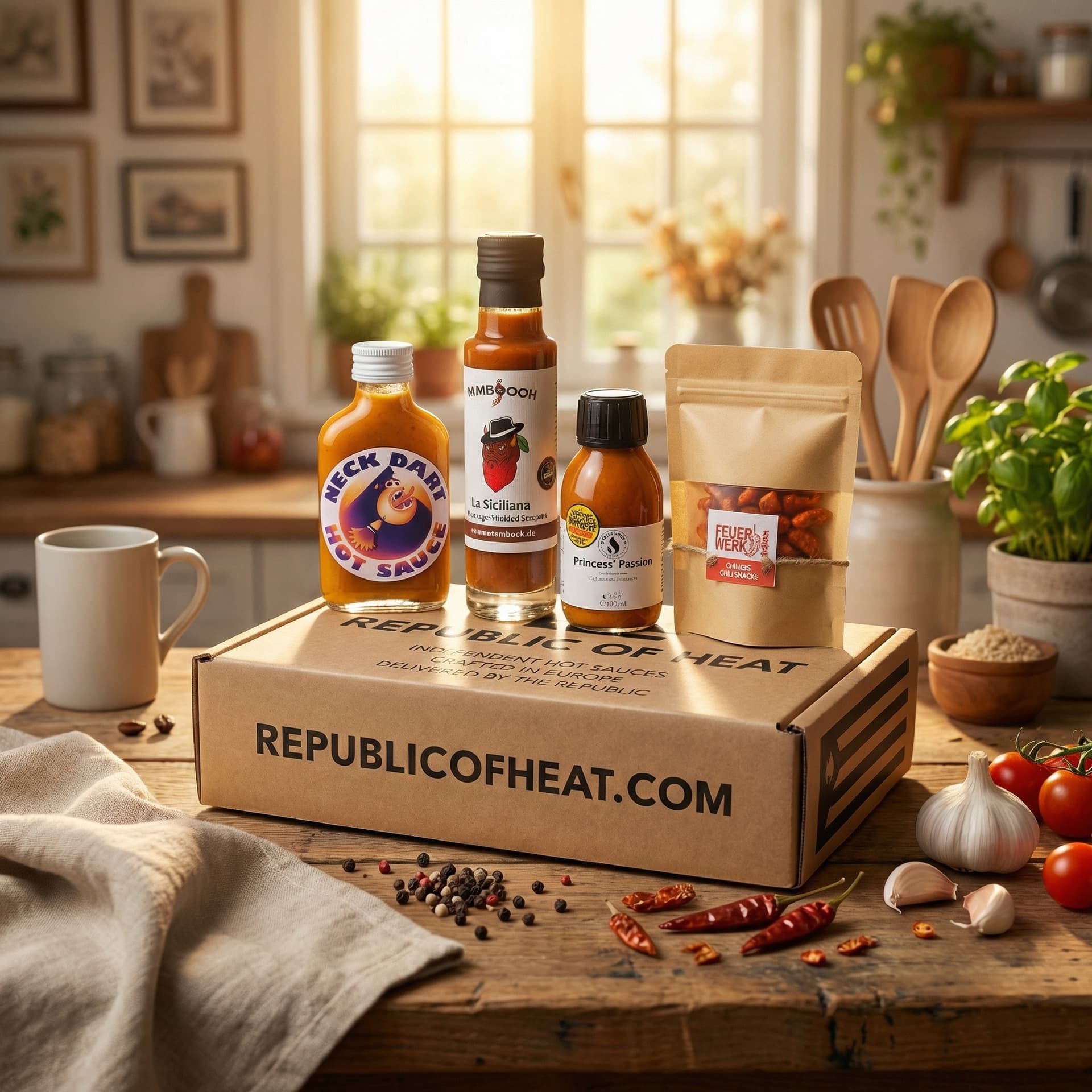
Nog niet klaar om je vast te leggen? Probeer het dan eens eenmalig.
Eén doos met drie verschillende sauzen. Proef ze naast elkaar, geef ze een beoordeling in je Sauce Vault en beslis of je dit ritueel wilt voortzetten.
Koop een proefpakketVeelgestelde vragen
Scotch Bonnet bereikt doorgaans een hoogte van 100,000-350,000 SHU (Zeer heet). Deze waarden variëren naargelang de cultivar en de teeltomstandigheden.
Heet, Fruitig, Klein, floral, Bal
Bonney Pepper, Caribbean Red komen voor als gangbare bijnamen, afhankelijk van de regio. De alternatieve namen van deze peper zijn meestal afkomstig uit regionale dialecten.
Bekijk Bird's Eye, Brazilian Malagueta, Datil, Habanero voor vergelijkbare gerechten of recepten.
- Bird's Eye - Very Hot
- Brazilian Malagueta - Very Hot
- Datil - Very Hot
- Habanero - Very Hot
Use Scotch Bonnets in jerk marinades, curry goat, pepper sauces, and stewed beans. Blend with scallions, garlic, vinegar, and allspice for Jamaican marinade base. Add slivers to rice and peas, mango chutney, or callaloo for brightness. They ferment well for mash style hot sauces, and dry into piercing flakes. Pair with tropical fruit, coconut milk, and grilled meats. The pepper's aroma survives cooking, so a single pod seasons large batches.
Grow Scotch Bonnets in warm, humid climates with full sun. Start seeds indoors 10 weeks before transplanting, since they germinate slowly. Maintain soil temperatures near 28°C for best emergence. Transplant after nights stay above 16°C. Plants reach about 70 cm tall and branch heavily, so provide space and airflow. Expect 100 to 120 days to first ripe pods. In cooler regions, greenhouse tunnels or large containers help extend the season. Regular feeding with calcium rich fertilizer reduces blossom end rot.
Wear gloves and eye protection when chopping Scotch Bonnets. Ventilate the kitchen while blending or simmering large batches. If pepper oil contacts skin, wash quickly with soap, then treat with dairy or diluted vinegar. Seek medical care if breathing becomes difficult.
Bronnen
- Republic of Heat veldnotities van het proeflaboratorium
- Via Directus ingediende producentendossiers
- Open rasregisters en wetenschappelijk onderzoek naar paprika’s
We vergelijken gegevens uit zaadbanken, peer-reviewed literatuur en gegevens van gerenommeerde producenten om de SHU-waarden en herkomstclaims te verifiëren.
Beoordeeld door Republic of Heat - laatst bijgewerkt op 2025-11-08