Capsicum annuum
Banana Pepper - Échelle de Scoville, saveur et utilisations
Banana peppers bring sunshine to the plate without the burn. The curved pods ripen from pale yellow to orange and red. Flavor stays sweet, tangy, and crisp, even when cooked. Central European citizens pickle them whole, then serve alongside cured meats and sandwiches. Italian delis stuff them with cheese and herbs. The pepper's thin walls absorb brines and marinades quickly, making them a staple for antipasto trays. With 0 to 500 SHU, they sit firmly in the Mild zone. Friendly crunch, gentle zing - approved by the Ministry of Everyday Heat. Banana Pepper mesure généralement 0-500 SHU (Léger). On le retrouve un peu partout en Hungary and Balkan region dans les condiments, les cornichons et les marinades. Slice banana peppers into salads, sandwiches, and pizzas for tangy crunch. Stuff them with cheese or sausage, then bake or grill. Pickle whole pods with garlic and herbs for antipasto. Chop into relish, or sauté with onions and sausage. They pair well with vinegar, oregano, olives, and cured meats. Because the heat is minimal, they work as kid-friendly peppers in stir fries and fajitas. Voir les sauces à base de Banana Pepper
Également connu sous le nom de: Banana Chili, Yellow Wax Pepper
Espèces
Capsicum annuum
Chaleur
Goût
Léger, Sucré, Piquant, Croustillant, stuffable
Origine / Régions
Hungary and Balkan region
Couleur / Forme
Pale yellow turning orange-red when ripe
Taille de la gousse
10-15 cm long, 2-3 cm wide
Essayez-le en situation réelle
Découvrez les sauces mettant en vedette Banana Pepper
3 sauces européennes produites en petites quantités : saveur, piquant et parfois un peu de folie, le tout dans une boîte.
Sauces à base de Banana Pepper
Découvrez comment les créateurs utilisent Banana Pepper dans différents styles et régions.
Nous n'avons pas encore répertorié de sauces contenant Banana Pepper.
Saveur et arôme
Profil thermique
Échelle de Scoville
0-500 SHU
Heat label
Mild
Période de récolte
Summer to early autumn
Indice de sauce
-
Histoire et culture
Notes sur la botanique et la culture
▼
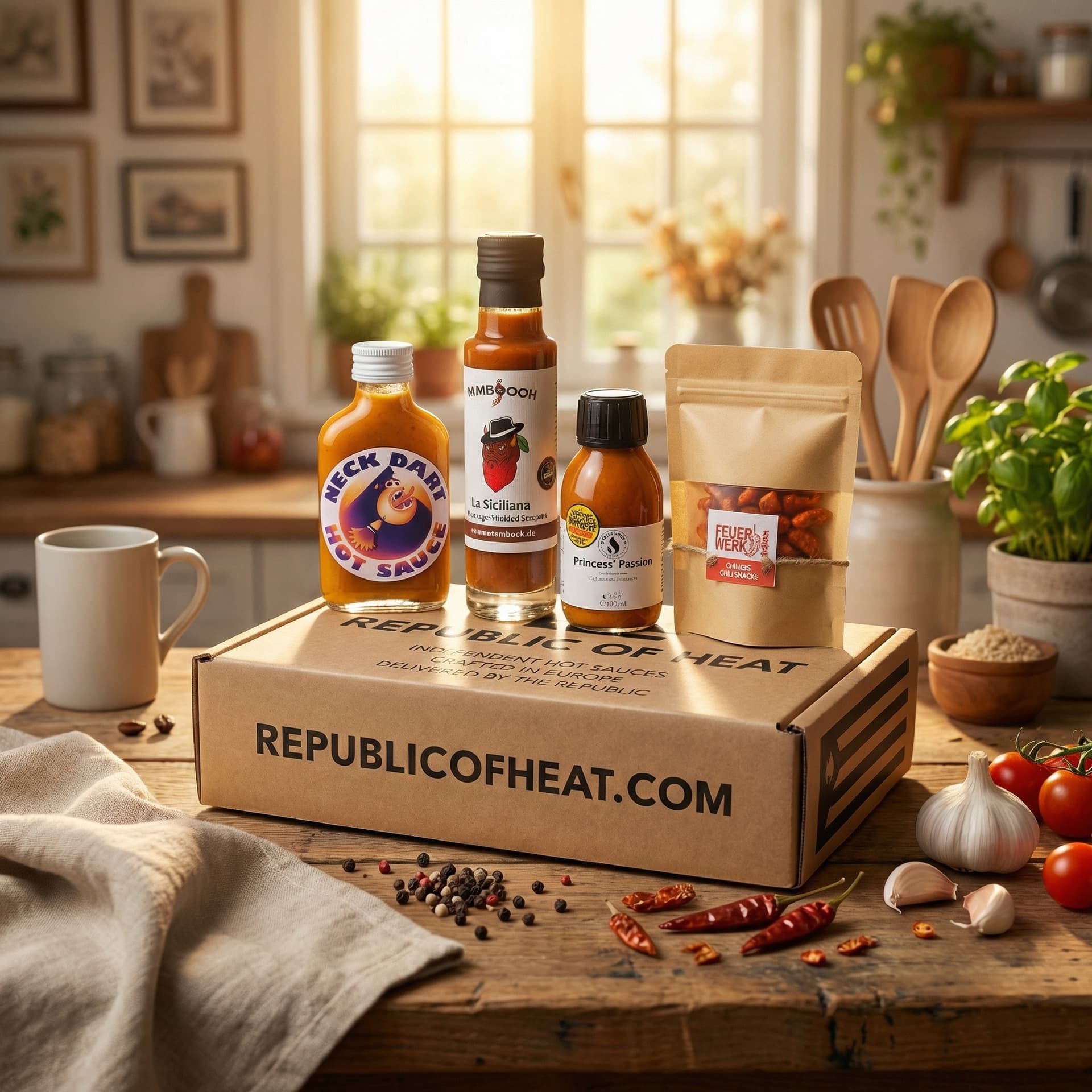
Vous n'êtes pas prêt à vous engager ? Essayez une fois.
Un seul coffret contenant trois sauces distinctes. Goûtez-les côte à côte, notez chacune d'elles dans votre « Sauce Vault », puis décidez si vous souhaitez poursuivre le rituel.
Acheter un coffret d'essaiFoire aux questions
Banana Pepper atteint généralement 0-500 SHU (Léger). Ces fourchettes varient en fonction du cultivar et des conditions de culture.
Léger, Sucré, Piquant, Croustillant, stuffable
Banana Chili, Yellow Wax Pepper apparaissent comme des pseudonymes courants selon la région. Les autres noms de ce piment proviennent pour la plupart de dialectes régionaux.
Consultez Anaheim, Ancho, Kashmiri Chili, Poblano pour trouver des plats ou des recettes similaires.
- Anaheim - Mild
- Ancho - Mild
- Kashmiri Chili - Mild
- Poblano - Mild
Slice banana peppers into salads, sandwiches, and pizzas for tangy crunch. Stuff them with cheese or sausage, then bake or grill. Pickle whole pods with garlic and herbs for antipasto. Chop into relish, or sauté with onions and sausage. They pair well with vinegar, oregano, olives, and cured meats. Because the heat is minimal, they work as kid-friendly peppers in stir fries and fajitas.
These peppers are easy to grow and productive. Start seeds indoors 6 weeks before the last frost. Transplant when soil warms above 15°C. Plants reach about 60 cm tall and produce dozens of pods. Provide full sun, fertile soil, and regular moisture. Harvest when peppers reach full size but remain yellow for crisp texture, or allow full ripening to orange-red for more sweetness. Frequent picking encourages new flowers.
Utilisez des gants, assurez une bonne ventilation et utilisez du savon pour éliminer les huiles de capsaïcine.
Sources
- Republic of Heat Notes de terrain du laboratoire de dégustation
- Dossiers des producteurs soumis via Directus
- Registres publics des variétés et recherche universitaire sur le poivron
Nous recoupons les informations provenant des banques de graines, de la littérature scientifique évaluée par des pairs et des données fournies par des producteurs reconnus pour vérifier les allégations relatives au SHU et à l'origine.
Révisé par Republic of Heat - dernière mise à jour le 2025-11-08