Capsicum chinense
Datil - Scoville, Taste & Uses
Datil peppers glow golden like tiny lanterns. Native to St. Augustine, they combine tropical sweetness with searing heat. Flavor suggests mango and apricot before a 100,000 to 300,000 SHU burn. Minorcan descendants brought the pepper in the 1700s and built a regional sauce culture around it. Citizens use datil in sweet-hot relishes, sausages, and seafood glazes. Makers craft preservative-free sauces sold at Florida festivals. Bright heat, coastal story - registered by the Ministry of Historic Flame. Datil typically measures 100,000-300,000 SHU (Very Hot). Shows up across United States, St. Augustine Florida in condiments, pickles, and marinades. Cook datils into minorcan clam chowder, seafood boils, and barbecue glaze. Blend them with mustard, fruit, or honey for balanced sauces. Dice into chutneys for pork or shrimp. They ferment well into vinegar-based table sauce. Pair with citrus, brown sugar, and allspice. See sauces using Datil
Also known as: St. Augustine Datil, Minorcan Pepper
Species
Capsicum chinense
Heat
Flavour
Hot, Fruity, Sweet, floral, lingering
Origin / Regions
United States, St. Augustine Florida
Colour / Shape
Green to golden orange when ripe
Pod size
4-6 cm long, 1-2 cm wide
Try it in the wild
Get sauces featuring Datil
3 European small-batch sauces - flavour, fire and occasionally a bit of chaos, in a box.
Sauces Using Datil
Explore how makers use Datil across styles and regions.
We have not logged sauces featuring Datil yet.
Flavour & Aroma
Datil peppers glow golden like tiny lanterns. Native to St. Augustine, they combine tropical sweetness with searing heat. Flavor suggests mango and apricot before a 100,000 to 300,000 SHU burn. Minorcan descendants brought the pepper in the 1700s and built a regional sauce culture around it. Citizens use datil in sweet-hot relishes, sausages, and seafood glazes. Makers craft preservative-free sauces sold at Florida festivals. Bright heat, coastal story - registered by the Ministry of Historic Flame.
Cook datils into minorcan clam chowder, seafood boils, and barbecue glaze. Blend them with mustard, fruit, or honey for balanced sauces. Dice into chutneys for pork or shrimp. They ferment well into vinegar-based table sauce. Pair with citrus, brown sugar, and allspice.
Heat Profile
Scoville range
100,000-300,000 SHU
Heat label
Very Hot
Harvest window
Late summer to early autumn
Sauce Index count
-
History & Culture
Legend says Minorcan settlers working on Florida’s indigo plantations introduced datil seeds from the Caribbean. The pepper thrived in St. Augustine’s humid climate and became a local treasure. Annual datil festivals celebrate its heritage, and the city recognizes it as an official pepper. Small farms continue to cultivate heirloom datil plants, keeping the tradition alive through sauces like “Bottled Hell.”
Botany & Growing Notes
▼
Datils prefer warm, humid environments. Start seeds indoors 10 weeks before planting and maintain 27°C for germination. Transplant when nights stay above 18°C. Plants reach about 90 cm tall and produce clusters of pods. Provide rich soil, consistent water, and mulch to retain moisture. Expect 100 to 110 days to first ripe peppers.
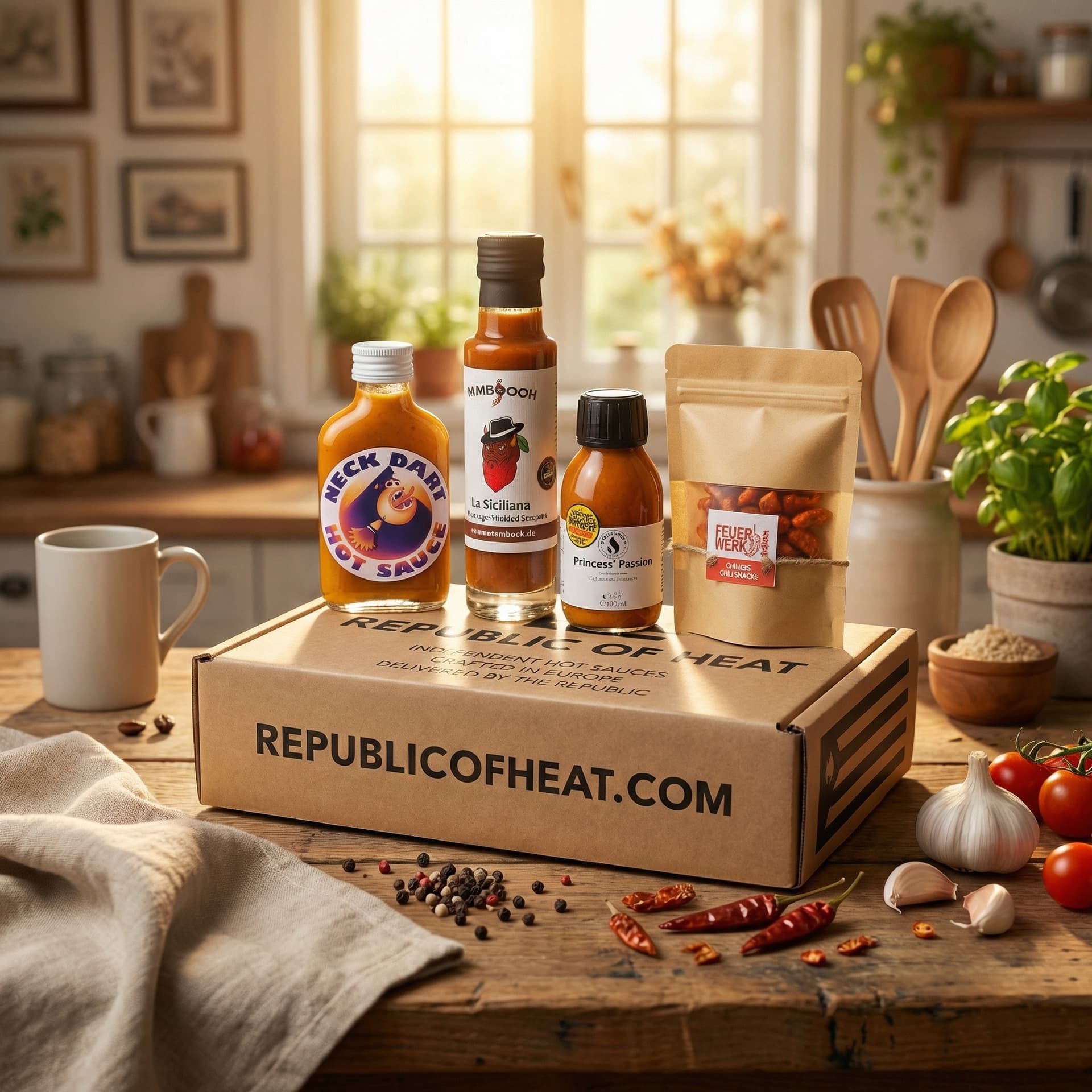
Not ready to commit? Try a one-off.
A single box with three independent sauces. Taste side-by-side, rate each one in your Sauce Vault, and decide if you want the ritual to continue.
Buy a discovery boxFAQ
Datil typically measures 100,000-300,000 SHU (Very Hot). Ranges shift with cultivar and growing conditions.
Hot, Fruity, Sweet, floral, lingering
St. Augustine Datil, Minorcan Pepper show up as common aliases depending on region. This pepper's alternate names mostly come from regional dialects.
Consider Bird's Eye, Brazilian Malagueta, Habanero, Madame Jeanette for comparable heat or recipes.
- Bird's Eye - Very Hot
- Brazilian Malagueta - Very Hot
- Habanero - Very Hot
- Madame Jeanette - Very Hot
Cook datils into minorcan clam chowder, seafood boils, and barbecue glaze. Blend them with mustard, fruit, or honey for balanced sauces. Dice into chutneys for pork or shrimp. They ferment well into vinegar-based table sauce. Pair with citrus, brown sugar, and allspice.
Datils prefer warm, humid environments. Start seeds indoors 10 weeks before planting and maintain 27°C for germination. Transplant when nights stay above 18°C. Plants reach about 90 cm tall and produce clusters of pods. Provide rich soil, consistent water, and mulch to retain moisture. Expect 100 to 110 days to first ripe peppers.
Wear gloves and eye protection when handling datils. Provide ventilation when simmering sauces. If oil contacts skin, wash immediately with soap, then apply dairy or alcohol to calm burn.
Sources
- Republic of Heat tasting lab field notes
- Producer dossiers submitted through Directus
- Open cultivar registries & academic pepper research
We cross-reference seed banks, peer-reviewed literature, and reputable producer data for SHU and origin claims.
Reviewed by Republic of Heat - last updated 2025-11-10